Plastics are one of Vietnam's fastest-growing industries. Packaging, pipes, household goods, shoe soles, car parts and electronics casings all begin as small pellets of plastic resin, and Vietnam makes only a small share of those pellets itself. Industry estimates put local output at around 15 to 35% of demand, which means the rest has to be bought abroad. In the first seven months of 2025 alone, Vietnam imported about 5.55 million tonnes of resin worth more than US$7.3 billion, and by the end of September the total had passed 7 million tonnes and US$9 billion.
For resin suppliers, traders and plastic makers, that is a large and visible market. This guide explains what Vietnam imports, which HS codes to search, who supplies each resin and how to read the shipment records in Vietnam plastics import data.

Vietnam Plastic Resin Imports: Key Numbers
| Measure | Figure | Period |
|---|---|---|
| Resin imported | About 5.55 million tonnes | January to July 2025 |
| Value of resin imported | More than US$7.3 billion | January to July 2025 |
| Growth in volume | Up 18.8% on the same months of 2024 | January to July 2025 |
| Growth in value | Up 11.6% on the same months of 2024 | January to July 2025 |
| Resin imported to date | About 7.2 million tonnes, US$9.4 billion | January to September 2025 |
| Plastic products imported | About US$7.9 billion | January to September 2025 |
| Plastic exports (HS 39) | About US$8.4 billion | First half of 2025 |
Volume grew faster than value, which tells you resin prices fell slightly over the year while demand rose. Plastic exports are growing too, and they depend on the imported resin that feeds Vietnamese factories.
The Main Resins and Their HS Codes
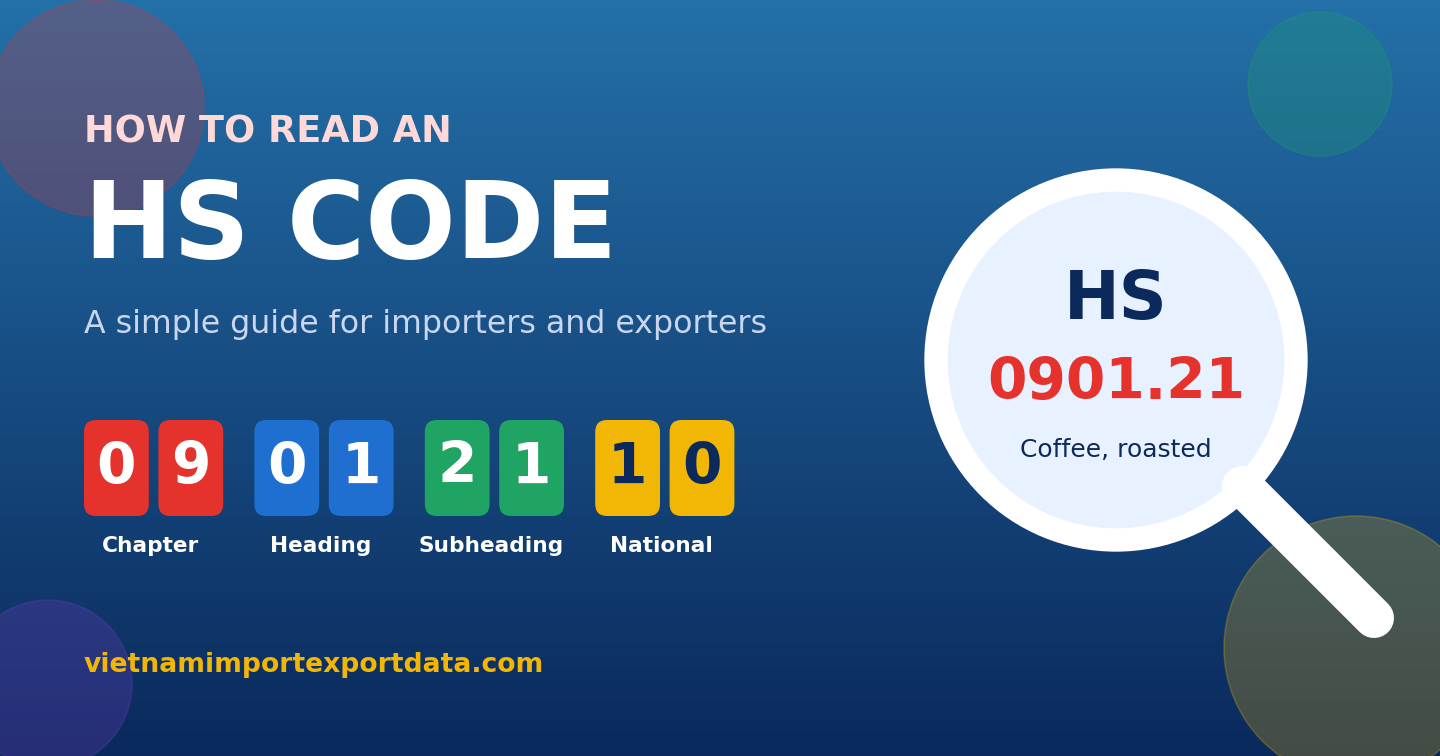
Resins sit in HS chapter 39, in headings 3901 to 3914, under the name "plastics in primary forms". Five families make up most of the trade.

| HS code | Resin | Typical products made in Vietnam |
|---|---|---|
| 3901 | Polymers of ethylene (PE, including LDPE, LLDPE, HDPE and EVA) | Bags, film, bottles, pipes, footwear foam |
| 3902 | Polymers of propylene (PP) | Food packaging, caps, woven bags, car parts |
| 3903 | Polymers of styrene (PS, EPS) | Foam trays, appliance parts, packaging |
| 3904 | Polymers of vinyl chloride (PVC) | Pipes, cable insulation, flooring, window frames |
| 3907 | Polyesters, polycarbonates, PET and polyethers | Drink bottles, fibres, engineering parts |
| 3908 to 3910 | Polyamides, amino resins, polyurethanes, silicones | Auto and electronics components, coatings |
Finished plastic goods such as film, sheets and packaging articles sit under 3920 and 3923, so a complete search should include those codes if you also want to see the downstream trade.
Who Supplies Vietnam's Resin
Supply comes from three groups: large Middle East producers, North and East Asian producers, and a smaller number of United States and Southeast Asian exporters. Which one leads depends on the resin, and the order has changed fast in recent years.
| Resin | Main supplier countries | What to know |
|---|---|---|
| PE (3901) | Saudi Arabia, South Korea, Singapore, United States, China | One market study puts Saudi Arabia at about a third of PE import value and South Korea at about 15% |
| PP (3902) | South Korea, China, with smaller shares from others | South Korea has led since 2019 and China has been second for the past two years |
| PVC (3904) | Asian producers | Pipes and construction demand drive volumes |
| PET (3907) | Asian producers | Bottle-grade resin for beverages and packaging |
The Polypropylene Story
Polypropylene shows how quickly supply can shift. In 2018 Saudi Arabia was Vietnam's top PP supplier with more than 20% of the market. By 2024 its share had dropped to about 5.8%, as South Korean producers took the lead and Chinese suppliers moved into second place with lower prices and shorter delivery times.

Why Vietnam Relies on Imports
- Limited local capacity: domestic producers can cover only a fraction of commodity resin demand, and most of the large resin plants are still being built or expanded.
- Fast-growing demand: new factories in packaging, consumer goods, electronics and auto parts need steady resin supply.
- Price competition: imported resin from large plants overseas is often cheaper than small-scale local output.
- Recycled resin: some makers use recycled material, which adds supply but does not replace the need for virgin resin in food-grade and technical uses.
How to Read a Resin Shipment Record
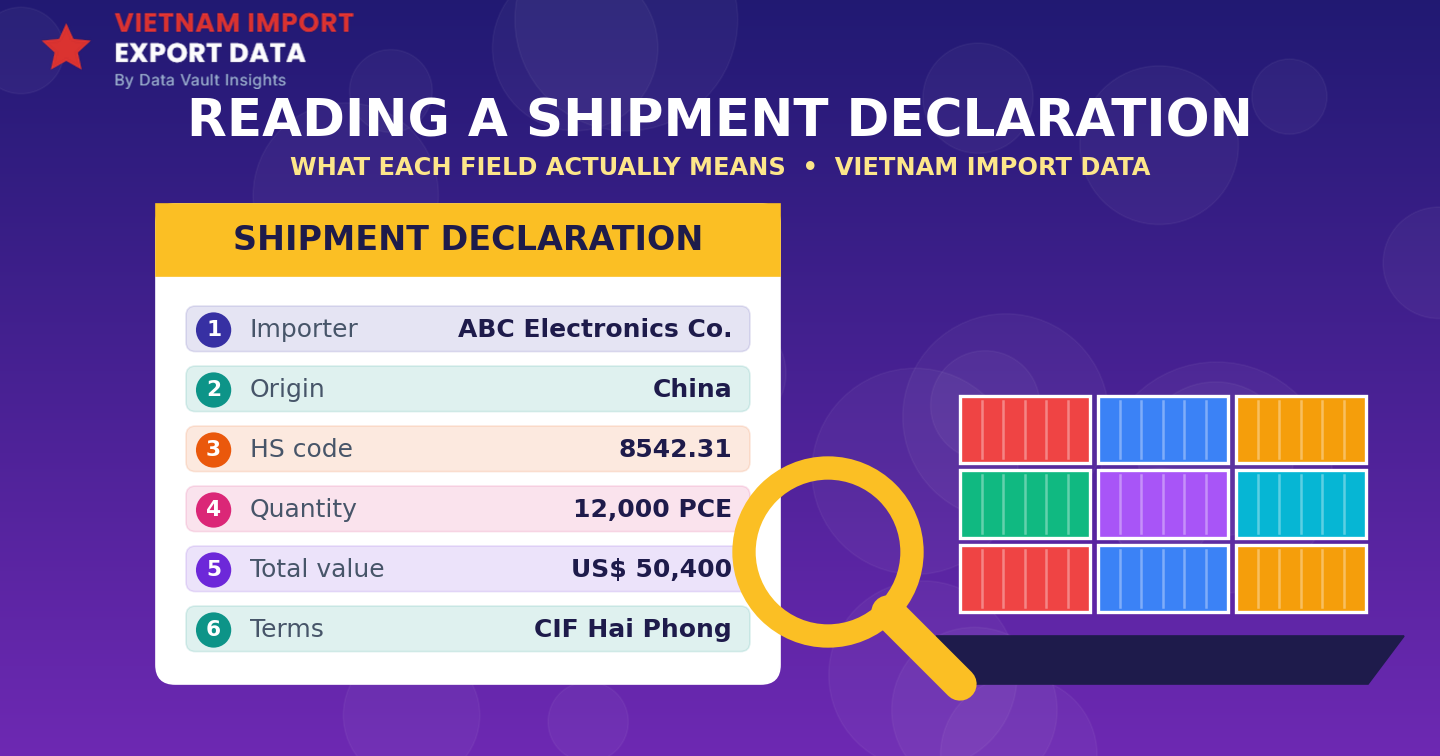
Resin is a bulk commodity, so records follow a few patterns. Knowing these terms makes the data much easier to use.
| Term in the record | Meaning | Why it matters |
|---|---|---|
| HDPE, LDPE, LLDPE | High, low and linear low density polyethylene | Each has different uses and prices |
| Homopolymer, copolymer | Two main types of polypropylene | Copolymer is used where impact strength matters |
| MFI, melt flow index | How easily the resin flows when melted | Decides if it suits injection, film or blow moulding |
| Prime, off-grade | First-quality or second-quality resin | Off-grade sells at a lower price |
| Virgin, recycled | New or reprocessed material | Different price band and buyer |
| Tonnes, TNE or KGM | Unit of measure | Convert to the same unit before comparing prices |
| 25 kg bags, bulk | How the resin is packed | Shows if the buyer is a large processor or a trader |
A Simple Search Plan for Resin Suppliers
- Pick the code. Use 3901 for PE, 3902 for PP, 3904 for PVC and 3907 for PET.
- Filter by origin country to see which suppliers sell into Vietnam from your region.
- Group by importer. The biggest names are large processors and traders. Mid-sized importers are often the best targets for new suppliers.
- Compare price per tonne for the same grade and shipping terms.
- Check the pattern. Monthly shipments mean ongoing contracts, while one-off lots suggest spot buying.
Frequently Asked Questions
How much plastic resin does Vietnam import?
About 5.55 million tonnes worth over US$7.3 billion in the first seven months of 2025, and more than 7 million tonnes by September.
What is the HS code for polypropylene?
Polypropylene in primary forms is classified under 3902, and polyethylene under 3901.
Which country is the biggest PP supplier to Vietnam?
South Korea has led since around 2019, with China in second place.
Does Vietnam make its own resin?
Yes, but only a small share. Estimates suggest local plants meet roughly 15 to 35% of demand, and the rest is imported.
Search Plastics Import Data
Ready to find resin buyers or suppliers? Open Vietnam plastics import data to search by HS code, importer and origin country, and compare prices by grade. If you need help matching a resin grade to the right code, send us an enquiry.
Disclaimer: Vietnam Import Export Data provides shipment records and trade datasets. We do not buy or sell any products. For purchasing or selling enquiries, please contact the importers and exporters listed in our datasets.